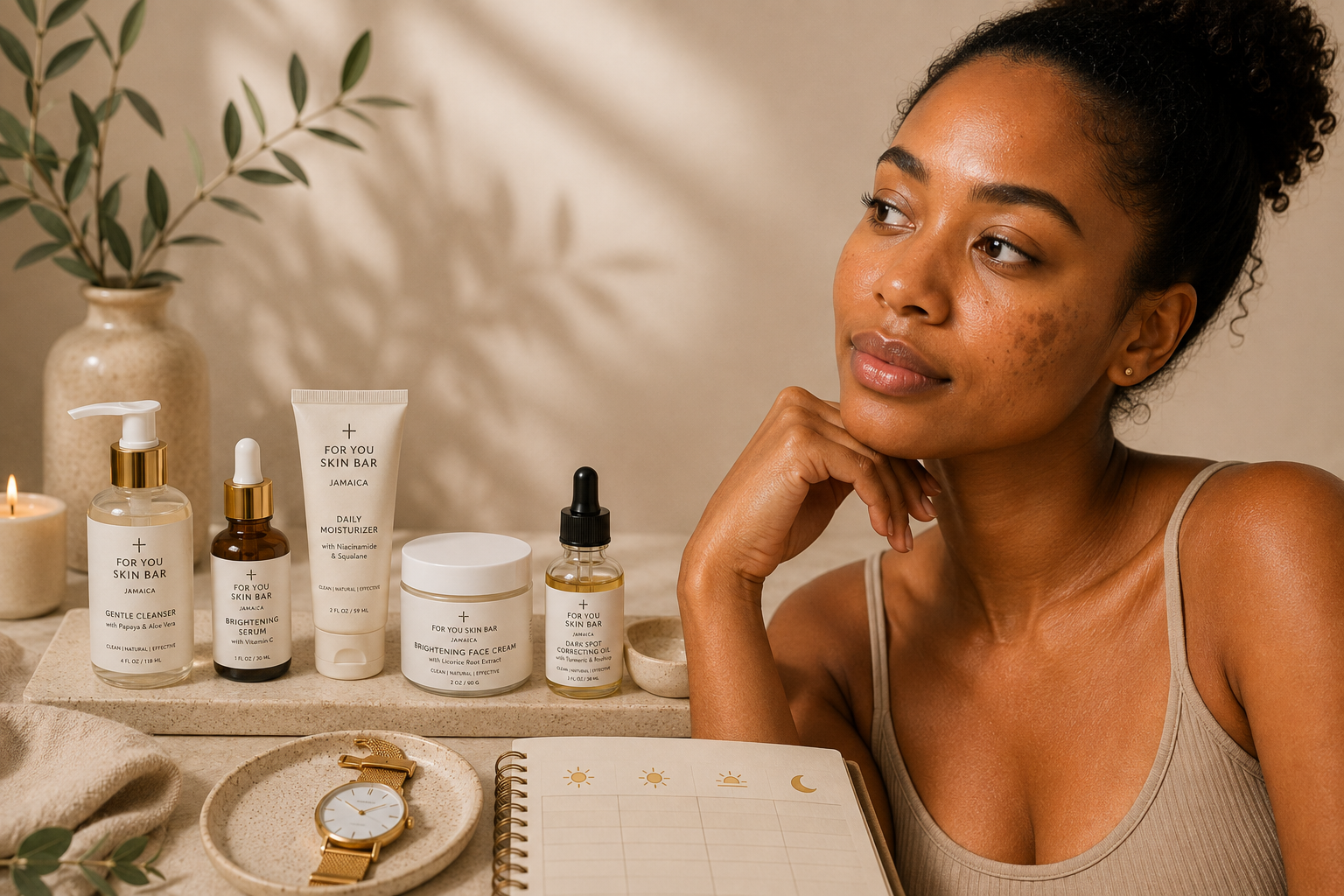
You finally notice that your acne has cleared.
You look in the mirror expecting smooth, even-looking skin, but the dark marks are still there.
If you’ve ever wondered, “Why are my dark spots taking so long to fade?”, you’re asking one of the most common skincare questions.
The short answer is this:
Dark spots usually fade much more slowly than the breakout that caused them.
While a pimple may heal in days, post-inflammatory hyperpigmentation (PIH) often takes weeks or months to become less noticeable.
The good news is that with patience, consistency, and the right skincare habits, many dark spots gradually improve over time.
Quick Facts
Topic
At a Glance
Can dark spots fade?
Yes, many post-inflammatory dark spots gradually become less noticeable.
How long does it take?
Often 8–12 weeks for newer marks, while older spots may take several months or longer.
What slows progress?
Sun exposure, picking at blemishes, inconsistent routines, and skin irritation.
Most important habit?
Daily sunscreen and a consistent skincare routine.
Why Do Dark Spots Last Longer Than Pimples?
When acne or another skin injury causes inflammation, your skin begins repairing itself.
As part of that healing process, melanocytes, the cells that produce melanin, can create extra pigment.
Even after the inflammation has settled, that pigment may remain.
Think of it like this:
The pimple is the event.
The dark spot is your skin’s memory of that event.
As your skin naturally renews itself, the excess pigment gradually becomes less noticeable.
📖 Skin School
Post-Inflammatory Hyperpigmentation (PIH)
Post-inflammatory hyperpigmentation is the flat discoloration left behind after inflammation, such as acne, insect bites, eczema, or minor skin injuries.
Unlike acne scars, PIH affects skin colour, not skin texture.
What Affects How Quickly Dark Spots Fade?
Every person’s skin heals differently.
Several factors influence how long hyperpigmentation remains visible.
1. Your Skin Tone
Melanin-rich skin naturally produces more pigment during healing.
Because of this, dark spots may appear more noticeable and take longer to fade than they do on lighter skin tones.
2. The Amount of Inflammation
A small whitehead often leaves less discoloration than a deep, inflamed cyst.
The more inflammation your skin experiences, the greater the likelihood of lingering pigmentation.
3. Sun Exposure
Ultraviolet (UV) rays can stimulate melanin production and make existing dark spots appear darker.
Daily sunscreen helps protect your progress while your skin heals.
4. Your Skincare Routine
Consistency matters.
A routine that gently cleanses, hydrates, protects the skin barrier, and addresses uneven skin tone gives your skin the support it needs over time.
🌿 The Foryou Tip
Avoid checking your dark spots every day.
Take a photo once each month in the same lighting.
Small improvements are often easier to see over time than from day to day.
A Realistic Timeline
Every skin journey is unique, but here’s a general guide.
Weeks 1–4
· Focus on consistency.
· Protect your skin from the sun.
· Avoid picking at blemishes.
You may not notice significant fading yet, and that’s okay.
Weeks 4–8
Some newer marks may begin to look lighter.
Your overall complexion may appear brighter and more even.
Weeks 8–12
Many people notice more visible improvement with a consistent routine.
Older or deeper pigmentation may still need more time.
Beyond 12 Weeks
Some dark spots, especially those caused by significant inflammation or long-term sun exposure, can continue improving over several months.
Patience is one of the most important parts of the process.
💡 Did You Know?
Your skin naturally renews itself in cycles. Every cycle helps bring newer skin cells to the surface, gradually reducing the appearance of many forms of post-inflammatory hyperpigmentation.
Common Mistakes That Slow Progress
Even a great routine can be undermined by a few common habits.
Skipping Sunscreen
UV exposure can make dark spots more noticeable and slow fading.
Picking at Pimples
Picking creates more inflammation, increasing the likelihood of new dark spots.
Using Too Many Products
Adding multiple exfoliants or brightening products at once can irritate your skin.
Sometimes, less really is more.
Expecting Overnight Results
Healthy skin changes gradually.
Visible improvement takes time.
🌺 From Jamaica With Care
Living in Jamaica means your skin is exposed to strong sunlight throughout the year.
Even short walks outdoors or sitting near sunny windows can increase UV exposure.
Daily sunscreen, hats, and seeking shade when practical all help protect your skin while it heals.
Think of sunscreen as preserving the progress your routine is already making.
Myth vs. Fact
Myth: If my dark spots haven’t disappeared in a month, nothing is working.
Fact: Hyperpigmentation often fades gradually. Consistency, patience, and protecting your skin from the sun are key parts of seeing improvement.
Key Takeaways
· Dark spots often remain longer than the acne that caused them.
· Melanin-rich skin may take longer to fade post-inflammatory hyperpigmentation.
· Sunscreen helps prevent existing spots from becoming darker.
· Avoid picking at blemishes.
· A simple, consistent routine supports healthier-looking skin over time.
Before You Go…
Healing doesn’t always happen as quickly as we’d like.
But every day you care for your skin, you’re supporting the natural renewal process that leads to healthier-looking skin over time.
Don’t let slow progress discourage you.
Celebrate the small changes, stay consistent with your routine, and remember that your skin is always working to repair itself.
At Foryou Skin Bar, we’re here to help you care for your skin with patience, confidence, and knowledge; because lasting results are built one day at a time.
Continue Reading
· The complete guide to hyperpigmentation
· The Difference Between Acne Scars and Hyperpigmentation
· The Biggest Mistakes People Make When Treating Dark Spots
· The Complete Guide to Building a Skincare Routine
Medical Disclaimer
The information in The Foryou Skin Journal is for educational purposes only and is not intended to diagnose, treat, cure, or prevent any medical condition. If your skin discoloration changes rapidly, becomes painful, or you have concerns about unusual spots or patches, consult a qualified healthcare provider or dermatologist.
References
This article is informed by guidance from the American Academy of Dermatology, the National Institute of Arthritis and Musculoskeletal and Skin Diseases (NIAMS), and peer-reviewed dermatology literature on post-inflammatory hyperpigmentation.
Last Reviewed: July 2026
Reviewed by: The Foryou Skin Bar Editorial Team
© 2026 Foryou Skin Bar. All Rights Reserved.