Quick Facts
Topic
At a Glance
Who is this guide for?
Anyone looking to build or improve a daily skincare routine.
How many steps do you need?
Most people can benefit from a simple routine of 3–5 essential steps.
How long before you see results?
Healthy skincare habits often show noticeable improvements after 8–12 weeks of consistency.
Most important step?
Consistency. The best routine is the one you can follow every day.
🌿 Introduction
Walk down any skincare aisle or scroll through social media, and you’ll see shelves full of cleansers, serums, toners, masks, oils, exfoliants, and moisturizers.
It’s easy to wonder:
“Do I really need all of this?”
The answer is usually no.
One of the biggest misconceptions about skincare is that more products lead to better results. In reality, healthy skin is often supported by a routine that’s simple, consistent, and tailored to your skin’s needs.
Whether you’re just starting your skincare journey or looking to simplify an existing routine, this guide will help you understand what each step does, when it’s needed, and how to build a routine that works for you.
At Foryou Skin Bar, we believe skincare should feel approachable—not overwhelming.
Table of Contents
1. Why a Routine Matters
2. Know Your Skin Type
3. The Four Essential Steps
4. Morning vs. Evening Routines
5. When to Add Targeted Treatments
6. Common Routine Mistakes
7. Ingredients by Skin Concern
8. Frequently Asked Questions
9. Final Thoughts
Chapter 1: Why Does a Skincare Routine Matter?
Your skin works around the clock to protect you from the outside world.
Every day it is exposed to:
· Dirt
· Sweat
· Oil
· Pollution
· Makeup
· Sunlight
· Changing weather
A consistent skincare routine helps support your skin by gently cleansing away buildup, maintaining hydration, protecting the skin barrier, and addressing concerns such as acne or uneven skin tone.
Think of your routine as daily maintenance rather than damage control.
Small, consistent actions often make a bigger difference than occasional intensive treatments.
💡 Did You Know?
Your skin naturally renews itself approximately every 28–40 days, though this process tends to slow with age. That’s one reason consistent routines often require several weeks before noticeable improvements become visible.
🌿 The Foryou Tip
Don’t build your routine around trends.
Build it around your skin.
The products your favourite influencer uses may not be the products your skin actually needs.
Chapter 2: Know Your Skin Type
Before choosing products, it’s important to understand your skin type.
Your skin type influences which products may feel most comfortable and which ingredients are best suited to your routine.
Oily Skin
Signs include:
· Noticeable shine throughout the day
· Enlarged pores
· Frequent blackheads or breakouts
People with oily skin often benefit from lightweight, non-greasy products that help maintain balance without stripping away natural moisture.
Dry Skin
Signs include:
· Tightness after cleansing
· Flaking
· Rough texture
· Skin that feels uncomfortable or dehydrated
Dry skin often benefits from richer moisturizers and ingredients that help support hydration.
Combination Skin
Combination skin includes both oily and dry areas.
Many people experience:
· An oily forehead, nose, and chin (the T-zone)
· Drier cheeks
This skin type often benefits from a balanced routine rather than treating the entire face the same way.
Sensitive Skin
Sensitive skin may react more easily to certain ingredients or environmental changes.
You may notice:
· Redness
· Stinging
· Burning
· Dry patches
· Irritation
Gentle, fragrance-conscious products and introducing new products one at a time may help reduce irritation.
Normal Skin
Normal skin generally feels balanced.
It isn’t excessively oily or dry and experiences relatively few concerns.
Even so, a daily routine remains important for maintaining healthy-looking skin.
📖 Skin School
Skin Barrier
Your skin barrier is the outermost protective layer of your skin.
It helps keep moisture in while helping protect against irritation, bacteria, and environmental stressors.
Many skincare concerns become more noticeable when the skin barrier is weakened.
Supporting your barrier is one of the foundations of healthy skin.
🌺 From Jamaica With Care
Jamaica’s warm, humid climate can influence your skincare routine.
Higher humidity may increase sweat and oil production, while strong sunlight can affect hydration and contribute to uneven skin tone.
Rather than using harsh products to remove every trace of oil, focus on maintaining balance.
A lightweight moisturizer and daily sunscreen are just as important in tropical climates as they are elsewhere.
Chapter 3: The Four Essential Steps
A good skincare routine doesn’t have to be complicated.
For most people, four essential steps provide an excellent foundation.
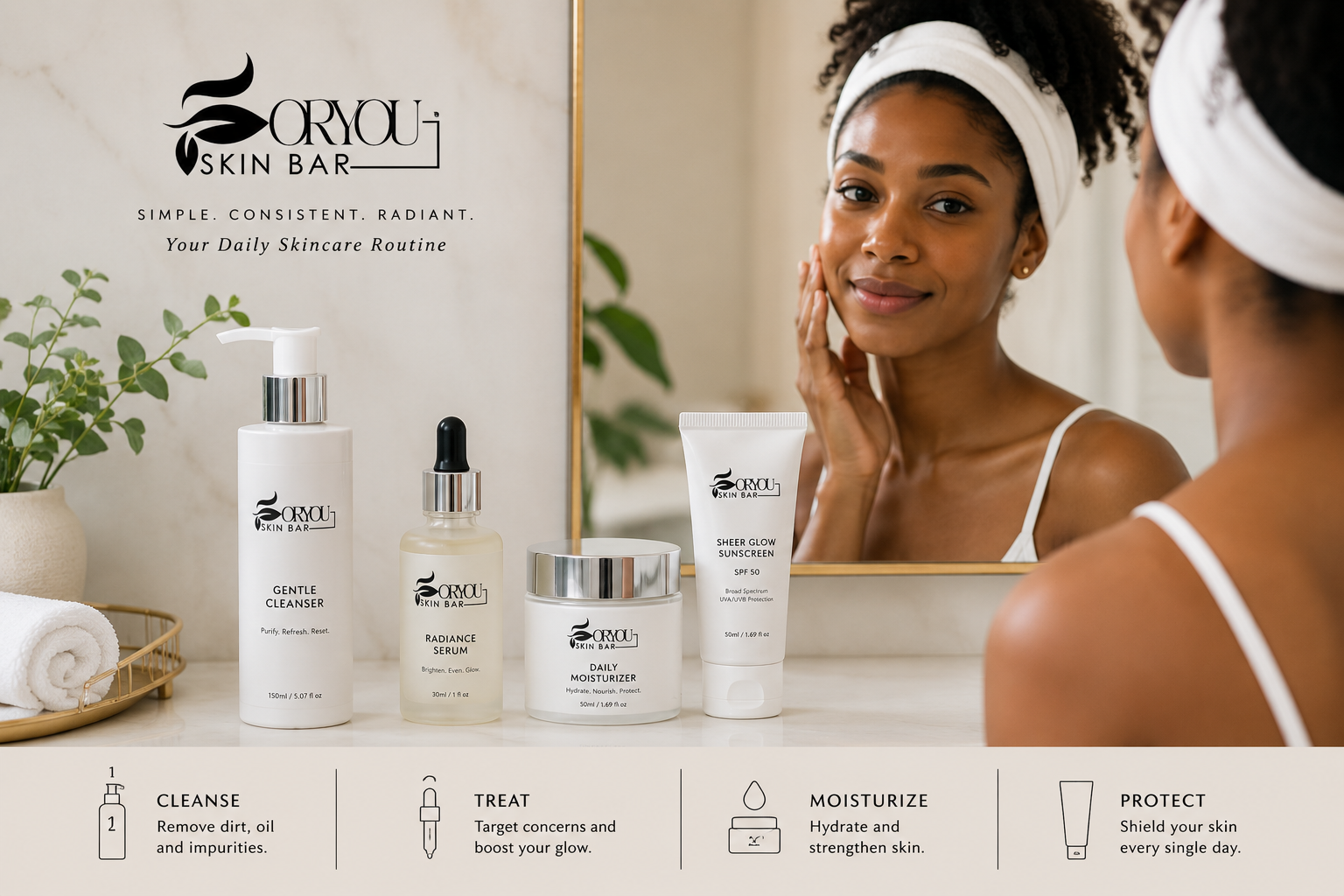
Step 1: Cleanse
A gentle cleanser removes:
· Oil
· Sweat
· Dirt
· Makeup
· Sunscreen
· Daily buildup
Choose a cleanser that leaves your skin feeling clean—not tight or stripped.
Step 2: Treat
This is where you address your individual skin concerns.
Examples include products designed to support:
· Acne-prone skin
· Uneven skin tone
· Dryness
· Dull-looking skin
Choose targeted treatments based on your skin’s needs rather than trying to solve every concern at once.
Step 3: Moisturize
Every skin type—including oily skin—benefits from appropriate hydration.
A moisturizer helps support your skin barrier and maintain comfort throughout the day.
Step 4: Protect
During the daytime, sunscreen is your final step.
It helps protect your skin from UV exposure, supports your skin’s natural defenses, and plays an important role in preventing existing dark spots from becoming more noticeable.
💚 Healthy Skin Habit
Give each new product time to work.
Unless you experience irritation, avoid judging a product after only a few days. Many skincare routines require several weeks of consistent use before noticeable changes become visible.
Chapter 4: Morning vs. Evening Skincare Routines
Your skin’s needs change throughout the day.
During the morning, your routine should focus on protecting your skin from environmental stressors. At night, your routine should focus on cleansing and supporting your skin’s natural renewal process.
Understanding this difference can help you choose the right products at the right time.
Your Morning Routine
Think of your morning routine as preparing your skin for the day ahead.
Step 1: Cleanse
Wash away overnight oil, sweat, and skincare residue with a gentle cleanser.
If your skin is very dry or sensitive, some people prefer simply rinsing with water in the morning. Pay attention to how your skin feels and choose the approach that works best for you.
Step 2: Apply Targeted Treatments
If you use a serum designed to support concerns such as uneven skin tone or dehydration, apply it after cleansing.
Avoid introducing multiple new treatment products at once.
Step 3: Moisturize
Choose a moisturizer that matches your skin type.
A lightweight lotion may feel more comfortable for oily skin, while dry skin often benefits from a richer cream.
Step 4: Sunscreen
This is the final and most important step of your daytime routine.
Broad-spectrum sunscreen helps protect your skin from UV rays, which can contribute to premature skin aging and make post-inflammatory hyperpigmentation more noticeable.
If you’re outdoors for extended periods, follow the product directions for reapplication.
🌺 From Jamaica With Care
In Jamaica, sunscreen isn’t just for beach days.
Whether you’re walking to work, sitting near a sunny window, or spending time outdoors with family, daily UV exposure adds up over time.
Making sunscreen part of your everyday routine is one of the most effective ways to support healthy-looking skin.
Your Evening Routine
Nighttime is when your skin naturally repairs and renews itself.
Your evening routine should focus on removing the day’s buildup and supporting your skin while you sleep.
Step 1: Cleanse
Remove sunscreen, makeup, sweat, and impurities before bed.
If you wear long-wear makeup or water-resistant sunscreen, you may benefit from a first cleanse to remove those products before using your regular facial cleanser.
Step 2: Apply Treatments
Night is often a good time for products that target specific concerns such as acne, uneven skin tone, or dryness.
Introduce new treatment products gradually and follow the directions provided with each product.
Step 3: Moisturize
Seal in hydration with a moisturizer that helps support your skin barrier overnight.
Healthy, well-hydrated skin is often more resilient and comfortable.
📖 Skin School
Skin Barrier
Your skin barrier is your body’s first line of defense.
When it’s healthy, it helps keep moisture in and irritants out.
When it’s damaged, your skin may become dry, irritated, or more reactive.
Supporting your barrier is one of the most important goals of any skincare routine.
Chapter 5: What Order Should You Apply Skincare Products?
One of the questions we hear most often is:
“What goes on first?”
A simple guideline is to apply products from the lightest texture to the heaviest.
Morning
1. Cleanser
2. Toner (if you use one)
3. Serum
4. Moisturizer
5. Sunscreen
Evening
1. Makeup remover (if needed)
2. Cleanser
3. Toner (optional)
4. Serum or treatment
5. Moisturizer
Your exact routine may vary depending on the products you use, but consistency is more important than having many steps.
💡 Did You Know?
Using products in the right order helps each step perform as intended. For example, sunscreen should always be the final step in your morning routine because it forms a protective layer over your skin.
Chapter 6: When Should You Add Extra Products?
Once you’ve established a consistent basic routine, you can decide whether additional products are appropriate for your skin.
Exfoliants
Exfoliation helps remove dead skin cells from the surface of your skin.
Many people only need to exfoliate one or two times a week.
Over-exfoliating can irritate the skin and weaken the skin barrier.
Face Masks
Masks can be a relaxing addition to your routine, but they are not essential for healthy skin.
Use them as a complement to your routine—not as a replacement for your daily habits.
Facial Oils
Some people enjoy facial oils as the final step in an evening routine, especially if their skin feels very dry.
Choose products that fit your skin type and comfort level.
🧴 Ingredient Spotlight
Hyaluronic Acid
What it is: A moisture-binding ingredient found naturally in the skin.
Why it’s used: It helps attract and retain moisture, leaving skin feeling hydrated.
Best for: Most skin types, including dry, combination, and dehydrated skin.
Remember: Hydration and oiliness are not the same thing. Even oily skin can become dehydrated.
Chapter 7: Common Skincare Routine Mistakes
Sometimes improving your skin isn’t about adding more—it’s about avoiding habits that get in the way.
Changing Products Too Often
Give your routine time to work.
Healthy skin changes gradually.
Skipping Moisturizer
Every skin type benefits from hydration.
Moisturizer helps support your skin barrier, even if your skin is oily.
Forgetting Sunscreen
Sunscreen isn’t just for preventing sunburn.
It also helps protect your skin from UV damage and supports an even-looking complexion.
Using Too Many Active Ingredients
More isn’t always better.
Introducing too many treatment products at once can increase irritation and make it difficult to know which product is helping—or causing problems.
Comparing Your Skin to Someone Else’s
Your skin is unique.
Genetics, hormones, lifestyle, environment, and consistency all influence your results.
Focus on your own progress.
⏳ What to Expect
Weeks 1–2
· Establish your routine.
· Learn how your skin responds.
· Avoid making unnecessary changes.
Weeks 3–6
· Skin may begin to feel more balanced and comfortable.
· Healthy habits become easier to maintain.
Weeks 8–12
· Many people begin noticing more consistent improvements in their overall complexion.
Remember, skincare is a long-term commitment—not a race.
🌿 The Foryou Tip
The best skincare routine isn’t the most expensive one.
It’s the one you’ll actually follow every morning and every evening.
Consistency beats complexity every time.
Key Takeaways
· A simple routine is often more effective than a complicated one.
· Every routine should begin with cleansing and end with sunscreen in the morning.
· Moisturizer benefits every skin type.
· Add new products gradually.
· Give your skin time to respond before changing your routine.
· Healthy skin is built through consistency and patience.
Frequently Asked Questions
How many skincare products do I really need?
For many people, a cleanser, moisturizer, sunscreen, and one targeted treatment are enough to build an effective routine.
Can I skip moisturizer if I have oily skin?
No.
Oily skin still needs hydration. A lightweight moisturizer can help support your skin barrier without feeling heavy.
Should I wash my face twice a day?
For most people, cleansing in the morning and evening is a good starting point. If your skin becomes dry or irritated, you may need to adjust your routine.
How long should I try a new routine?
Unless you experience irritation, give your routine around 8–12 weeks before expecting meaningful improvements.
Can I use every active ingredient together?
Not always.
Some ingredients may increase irritation when combined. Introduce products gradually and follow product directions.
Before You Go…
A good skincare routine doesn’t have to be complicated.
It doesn’t need ten steps, expensive products, or constant changes.
It simply needs to be thoughtful, consistent, and built around your skin’s needs.
At Foryou Skin Bar, we believe skincare is one of the simplest ways to care for yourself. Every time you cleanse your face, apply moisturizer, or protect your skin with sunscreen, you’re making an investment in your future skin health.
Start simple.
Stay consistent.
Celebrate progress.
Healthy-looking skin is built one routine at a time.
Continue Your Journey
Next, explore:
· The Complete Guide to Acne
· The Complete Guide to Hyperpigmentation
· The Best Skincare Routine for Hormonal Acne
· How Long Does It Really Take to Fade Dark Spots?
· The Difference Between Acne Scars and Hyperpigmentation
Medical Disclaimer
The information provided in The Foryou Skin Journal is for educational and informational purposes only. It is not intended to diagnose, treat, cure, or prevent any disease or medical condition, nor should it replace professional medical advice, diagnosis, or treatment.
If you have persistent skin concerns, severe irritation, or symptoms that do not improve with a consistent skincare routine, consult a qualified healthcare provider or dermatologist.
Products from Foryou Skin Bar are designed to support healthy-looking skin and should be used as directed.
References
This guide is informed by educational resources and dermatology guidance, including:
· American Academy of Dermatology
· National Institute of Arthritis and Musculoskeletal and Skin Diseases (NIAMS)
· Peer-reviewed dermatology literature on skincare routines, skin barrier function, and photoprotection
Last Reviewed: July 2026
Reviewed by: The Foryou Skin Bar Editorial Team
© 2026 Foryou Skin Bar. All Rights Reserved.