Quick Facts
Topic
At a Glance
What is it?
Hyperpigmentation is an increase in melanin that causes areas of skin to appear darker than the surrounding skin.
Is it harmful?
Usually not, but it can affect confidence and may take time to fade.
Who gets it?
Anyone can develop hyperpigmentation, but it is often more noticeable and longer lasting in melanin-rich skin.
Can it improve?
Yes. Consistent skincare, sun protection, and patience can significantly improve the appearance of many types of hyperpigmentation.
🌿 Introduction
The breakout is finally gone.
You breathe a sigh of relief, expecting your skin to look clear again.
Instead, you’re left staring at a dark mark that seems to linger for weeks—or even months.
If you’ve ever felt like the pimple healed but the reminder stayed behind, you’re not alone.
For many people, especially those with melanin-rich skin, the real challenge begins after the breakout disappears.
Those lingering marks are often a form of hyperpigmentation, one of the most common skin concerns worldwide.
The encouraging news is that hyperpigmentation is often manageable. While it rarely fades overnight, understanding why it happens—and how to care for your skin consistently—can make a meaningful difference over time.
In this guide, you’ll learn:
· What hyperpigmentation is
· Why it develops
· The different types of dark spots
· Why melanin-rich skin requires special consideration
· Ingredients that help support a more even-looking complexion
· How to build a routine that encourages healthier-looking skin
· Common mistakes that slow progress
· Realistic expectations for improvement
At Foryou Skin Bar, we believe confidence begins with understanding your skin—not chasing perfection.
📖 Table of Contents
1. What Is Hyperpigmentation?
2. How Melanin Works
3. Types of Hyperpigmentation
4. Why Dark Spots Develop
5. Hyperpigmentation in Melanin-Rich Skin
6. Common Myths
7. Building a Brightening Routine
8. Ingredients That Support Even Skin Tone
9. Lifestyle Habits That Matter
10. Frequently Asked Questions
11. Final Thoughts
Chapter 1: What Is Hyperpigmentation?
Hyperpigmentation is a common skin concern that causes patches or spots of skin to become darker than the surrounding area.
This happens when your skin produces more melanin than it needs in response to a trigger.
Melanin is the natural pigment responsible for the color of your skin, hair, and eyes. It also plays an important role in helping protect your skin from ultraviolet (UV) radiation.
When the skin experiences inflammation or injury, it sometimes responds by producing extra melanin as part of the healing process.
The result can be:
· Acne marks
· Sun spots
· Post-inflammatory hyperpigmentation
· Uneven skin tone
· Areas that appear darker than the rest of your complexion
Hyperpigmentation is usually a cosmetic concern rather than a dangerous condition, but it can take weeks or even months to improve without consistent care.
📖 Skin School
Melanin
Melanin is your skin’s natural pigment. It gives your skin its unique color and helps provide some protection from the sun’s ultraviolet rays.
People with deeper skin tones naturally produce more melanin, which is one reason post-inflammatory hyperpigmentation can appear darker and persist longer after acne or irritation.
💡 Did You Know?
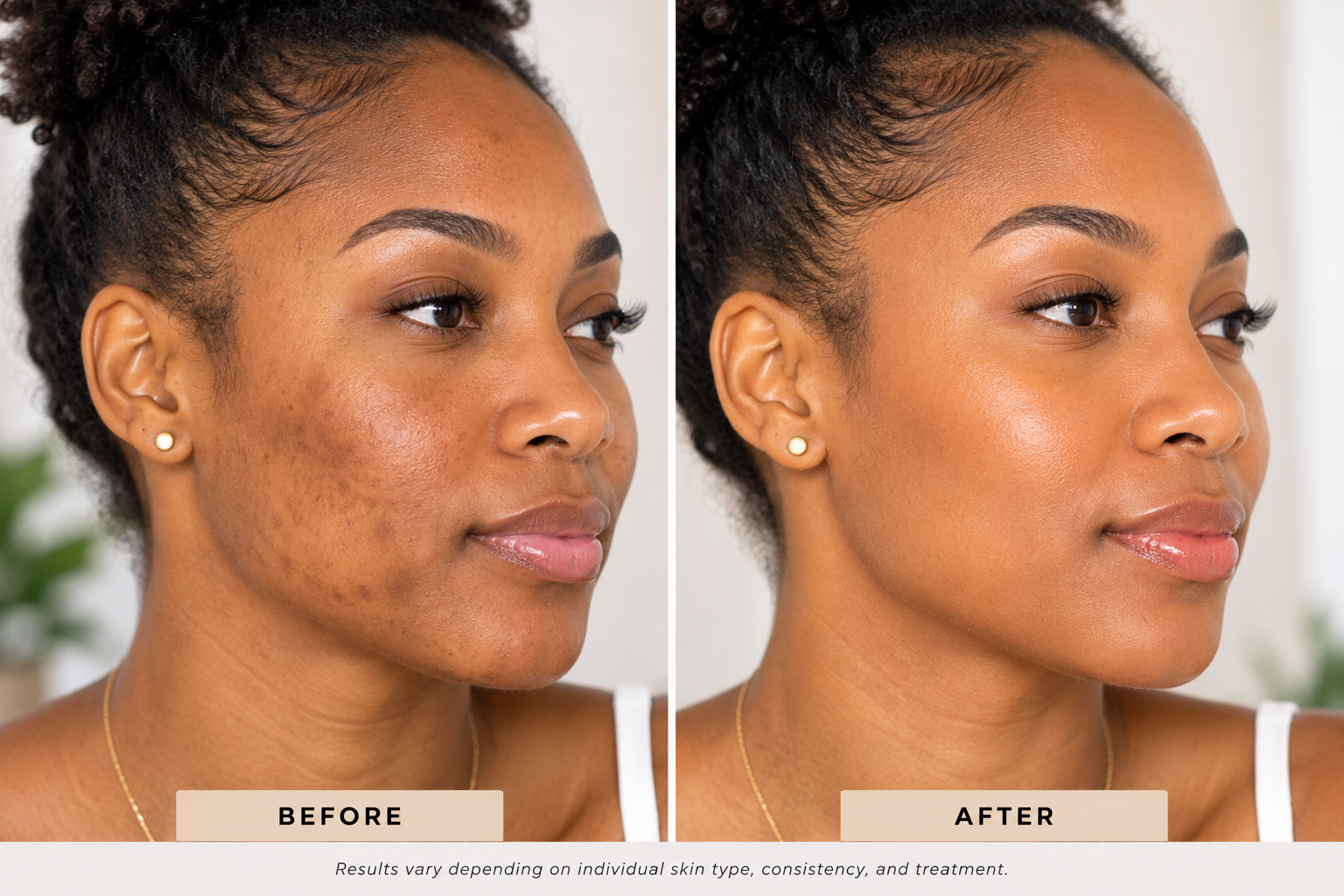
A pimple may heal in a matter of days, but the dark mark it leaves behind can remain for several months because your skin continues producing excess melanin long after the inflammation has settled.
🌿 The Foryou Tip
Treat dark spots with patience, not harshness.
Using too many strong products at once can irritate your skin, increase inflammation, and slow your progress. A simple, consistent routine is often the most effective approach.
Myth vs. Fact
Myth:
Dark spots mean your skin is permanently damaged.
Fact:
Many forms of hyperpigmentation gradually improve over time, especially when you protect your skin from the sun and follow a consistent skincare routine.
Chapter 2: How Melanin Works
To understand hyperpigmentation, it’s helpful to first understand melanin—the natural pigment that gives your skin, hair, and eyes their unique color.
Melanin does much more than determine skin tone. It also plays an important role in protecting your skin from the effects of ultraviolet (UV) radiation.
When your skin experiences inflammation or injury, your body begins repairing the affected area. As part of this process, specialized skin cells called melanocytes produce melanin.
Usually, this healing process is balanced.
Sometimes, however, your skin produces more melanin than necessary, leaving behind a darker patch after the original injury has healed.
This is why a small pimple can disappear within days while the dark mark it leaves behind remains for weeks or months.
Why Does Melanin Sometimes Overreact?
Your skin is designed to protect itself.
When it senses inflammation—whether from acne, a scratch, an insect bite, or irritation—it often responds by producing additional pigment.
Think of melanin as your skin’s natural defense system.
Sometimes that defense stays active longer than it needs to.
The result is lingering discoloration.
Why Is Hyperpigmentation More Noticeable in Melanin-Rich Skin?
People with medium to deep skin tones naturally have more active melanocytes.
That’s one of the reasons melanin-rich skin has many wonderful strengths, including increased natural protection against UV damage.
However, it also means the skin can respond more dramatically to inflammation by producing excess pigment.
This is why post-inflammatory hyperpigmentation is often:
· Darker
· More noticeable
· Slower to fade
The encouraging news is that with consistent care, many of these marks improve significantly over time.
📖 Skin School
Melanocytes
Melanocytes are specialized cells responsible for producing melanin. They help determine your natural skin tone and play an important role in your skin’s response to inflammation and sun exposure.
💡 Did You Know?
Two people can experience the exact same acne breakout but heal differently because their skin produces different amounts of melanin during the healing process.
🌿 The Foryou Tip
Don’t compare your skin journey to someone else’s.
Your skin tone, genetics, lifestyle, and skincare routine all influence how quickly your skin heals.
Progress is personal.
Chapter 3: The Different Types of Hyperpigmentation
Not every dark spot has the same cause.
Understanding why the discoloration developed helps you choose the most appropriate skincare routine and know when professional advice may be beneficial.
Post-Inflammatory Hyperpigmentation (PIH)
This is the most common type of hyperpigmentation we discuss at Foryou Skin Bar.
PIH develops after the skin becomes inflamed.
Common triggers include:
· Acne
· Insect bites
· Cuts
· Burns
· Eczema flare-ups
· Allergic reactions
After the inflammation settles, excess melanin remains in the affected area, creating a flat dark mark.
What It Looks Like
· Brown
· Dark brown
· Gray
· Purple-brown (depending on skin tone)
Unlike scars, PIH does not change the texture of the skin.
The surface usually feels completely smooth.
Melasma
Melasma appears as larger patches of discoloration rather than individual spots.
It commonly develops on:
· Cheeks
· Forehead
· Upper lip
· Chin
Melasma is often associated with:
· Hormonal changes
· Pregnancy
· Birth control
· Sun exposure
Because melasma can have several contributing factors, it may require a different treatment approach than post-inflammatory hyperpigmentation.
Sun Spots (Solar Lentigines)
Years of cumulative sun exposure can lead to small, flat dark spots commonly known as sun spots or age spots.
These often appear on areas that receive frequent sun exposure, including:
· Face
· Hands
· Shoulders
· Arms
Daily sunscreen is one of the best ways to help reduce the risk of developing additional sun spots.
Freckles
Freckles are small clusters of pigment influenced primarily by genetics and sun exposure.
Unlike post-inflammatory hyperpigmentation, freckles are not caused by injury or inflammation.
Many people embrace freckles as part of their natural appearance.
Drug-Induced Hyperpigmentation
Certain medications may contribute to changes in skin pigmentation.
If you notice widespread or unexpected darkening after starting a new medication, consult the healthcare provider who prescribed it.
Do not stop taking prescribed medication without professional guidance.
Myth vs. Fact
Myth
Every dark spot is an acne scar.
Fact
Many dark marks are actually post-inflammatory hyperpigmentation, which affects skin color rather than skin texture.
Understanding the difference helps you choose the most appropriate skincare approach.
🌺 From Jamaica With Care
Living in Jamaica means enjoying sunshine nearly all year—but it also means your skin is regularly exposed to strong ultraviolet rays.
Many people believe that deeper skin tones don’t need sunscreen because melanin provides natural protection.
While melanin does offer some protection, it doesn’t prevent hyperpigmentation.
In fact, UV exposure can make existing dark spots appear darker and slow the fading process.
Whether you’re spending the day at the beach, running errands in Kingston, or enjoying a weekend outdoors, daily sunscreen is one of the simplest ways to support a more even-looking complexion.
Think of sunscreen as protecting the progress your skincare routine is already making.
💚 Healthy Skin Habit
Keep a wide-brimmed hat or umbrella handy when you’re spending extended time outdoors.
Sun-protective habits work together with sunscreen to help reduce unnecessary UV exposure.
Chapter 4: Why Do Dark Spots Develop?
Hyperpigmentation isn’t a skin condition on its own—it’s your skin’s response to something that has already happened. Understanding the cause of your dark spots can help you choose the most appropriate skincare routine and prevent new spots from forming.
Acne
Acne is one of the leading causes of post-inflammatory hyperpigmentation. As a pimple heals, your skin may produce extra melanin in response to the inflammation, leaving behind a flat dark mark long after the breakout has disappeared.
The more inflamed the blemish, the greater the chance of developing noticeable discoloration.
Insect Bites
Mosquito bites and other insect bites are common in tropical climates. Scratching them can increase inflammation and raise the likelihood of developing dark spots, especially on melanin-rich skin.
Cuts, Burns, and Scratches
Even minor skin injuries can leave temporary discoloration while your skin heals. Treating wounds gently and protecting healing skin from the sun can help support a more even recovery.
Eczema and Skin Irritation
Conditions that cause repeated inflammation—such as eczema or allergic reactions—can also trigger hyperpigmentation.
Keeping these conditions well managed may help reduce future discoloration.
Friction
Repeated rubbing from tight clothing, shaving, or frequent skin-to-skin contact may contribute to darker areas over time, particularly in places like the neck, underarms, inner thighs, or elbows.
Sun Exposure
Ultraviolet (UV) rays don’t always create dark spots directly, but they can make existing pigmentation appear darker and last longer.
That’s why sunscreen is one of the most important steps in any routine focused on achieving a more even-looking complexion.
🌺 From Jamaica With Care
Living in the Caribbean means enjoying sunshine almost every day—but your skin experiences UV exposure almost every day too.
Whether you’re commuting to work, waiting on transportation, walking through town, or spending time outdoors on the weekend, those short periods of sun exposure add up over time.
Daily sun protection isn’t about avoiding the sun—it’s about protecting the progress your skincare routine is making.
Chapter 5: Building a Routine for Hyperpigmentation
When treating dark spots, consistency matters far more than using many products at once.
A simple routine followed every day is usually more effective than an elaborate routine you struggle to maintain.
Morning Routine
Step 1: Gentle Cleanser
Begin with a cleanser that removes overnight oil and impurities without leaving your skin feeling stripped or tight.
Step 2: Brightening Serum
Choose products formulated with ingredients that help improve the appearance of uneven skin tone.
Step 3: Moisturizer
Hydrated skin supports a healthy skin barrier and is better equipped to recover from daily environmental stress.
Step 4: Sunscreen
This is the most important daytime step.
Without daily sun protection, existing dark spots may remain visible longer and new discoloration may develop more easily.
Evening Routine
Step 1: Cleanse
Remove sunscreen, makeup, sweat, and the day’s buildup.
Step 2: Treatment Products
Apply products consistently according to their directions.
Avoid introducing several new active ingredients at the same time.
Step 3: Moisturize
Support your skin’s overnight recovery with a moisturizer suited to your skin type.
🧴 Ingredient Spotlight
Kojic Acid
What it is: A naturally derived ingredient commonly used in skincare products formulated to address uneven skin tone.
Why it’s used: Kojic acid helps improve the appearance of dark spots by supporting a brighter, more even-looking complexion.
Best for: Post-inflammatory hyperpigmentation, uneven skin tone, and dull-looking skin.
Remember: Results take time. Consistent use and daily sunscreen work together to support visible improvement.
Chapter 6: Common Mistakes That Slow Progress
Sometimes, the habits we think are helping our skin are actually delaying improvement.
Skipping Sunscreen
Daily sunscreen is one of the most effective ways to protect your progress.
Picking at Blemishes
Picking increases inflammation and raises the risk of developing additional dark spots.
Using Too Many Active Ingredients
Layering several exfoliants or brightening products can irritate your skin and compromise its natural barrier.
Switching Products Too Quickly
Most skincare products need several weeks of consistent use before meaningful changes become noticeable.
Patience is one of the most valuable skincare habits you can develop.
💡 Did You Know?
Your skin naturally renews itself over time. As fresh skin cells replace older ones, many forms of post-inflammatory hyperpigmentation gradually become less noticeable—especially when your routine supports healthy skin renewal.
⏳ What to Expect
Every person’s skin is different, but this general timeline can help set realistic expectations.
Weeks 1–4
· Establish a consistent routine.
· Focus on protecting your skin barrier.
· Wear sunscreen every day.
Weeks 4–8
· Some newer dark spots may begin to look lighter.
· Your overall complexion may appear brighter and more even.
Weeks 8–12
· Continued improvement becomes more noticeable for many people with consistent care.
Beyond 12 Weeks
Older or deeper pigmentation may continue improving over several months. Consistency remains your greatest ally.
🌿 The Foryou Tip
Take a photo of your skin once every four weeks in the same lighting.
Progress is often easier to see when you compare photos than when you look in the mirror every day.
Key Takeaways
· Hyperpigmentation is caused by excess melanin produced during your skin’s healing process.
· Dark spots are often temporary, but they require patience and consistency.
· Melanin-rich skin is more likely to develop noticeable post-inflammatory hyperpigmentation.
· Daily sunscreen helps protect your progress.
· Avoid picking at blemishes or irritating your skin.
· A simple routine followed consistently usually produces better results than constantly changing products.
Frequently Asked Questions
How long does hyperpigmentation take to fade?
Many newer dark spots begin improving within 8–12 weeks of consistent skincare, while older or deeper pigmentation may take several months. Individual results vary.
Is hyperpigmentation the same as an acne scar?
No.
Hyperpigmentation changes skin colour. Acne scars change skin texture.
Can dark spots disappear completely?
Many dark spots fade significantly over time. The outcome depends on the cause, the depth of the pigmentation, your skin type, and how consistently you care for your skin.
Should I exfoliate every day?
Not usually.
Over-exfoliating may irritate your skin and increase inflammation. Follow the directions for your chosen products and pay attention to how your skin responds.
Do people with darker skin need sunscreen?
Yes.
Although deeper skin tones naturally contain more melanin, sunscreen helps reduce UV damage and can help prevent existing hyperpigmentation from becoming darker.
Before You Go…
Dark spots can test your patience.
It’s easy to feel discouraged when a mark seems to stay long after the original breakout has healed.
But your skin is constantly renewing itself.
Every gentle cleanse, every application of sunscreen, every evening routine is an investment in healthier-looking skin.
At Foryou Skin Bar, we believe skincare isn’t about chasing perfection—it’s about showing your skin consistent care and giving it the time it needs to respond.
Celebrate the small improvements. Stay consistent. Trust the process.
Healthy skin is built one day at a time.
Continue Your Journey
Next, explore:
· The Difference Between Acne Scars and Hyperpigmentation
· How Long Does It Really Take to Fade Dark Spots?
· The Biggest Mistakes People Make When Treating Dark Spots
· The Best Skincare Routine for Hormonal Acne
Medical Disclaimer
The information provided in The Foryou Skin Journal is for educational and informational purposes only. It is not intended to diagnose, treat, cure, or prevent any disease or medical condition, nor should it replace professional medical advice, diagnosis, or treatment.
If you have persistent skin discoloration, rapidly changing skin lesions, severe irritation, or another skin concern that does not improve with routine skincare, consult a qualified healthcare provider or dermatologist.
Products from Foryou Skin Bar are designed to support healthy-looking skin and should be used as directed.
References
This guide is informed by educational resources and dermatology guidance, including:
· American Academy of Dermatology
· National Institute of Arthritis and Musculoskeletal and Skin Diseases (NIAMS)
· Peer-reviewed dermatology literature on hyperpigmentation and post-inflammatory hyperpigmentation
Last Reviewed: July 2026
Reviewed by: The Foryou Skin Bar Editorial Team
© 2026 Foryou Skin Bar. All Rights Reserved.