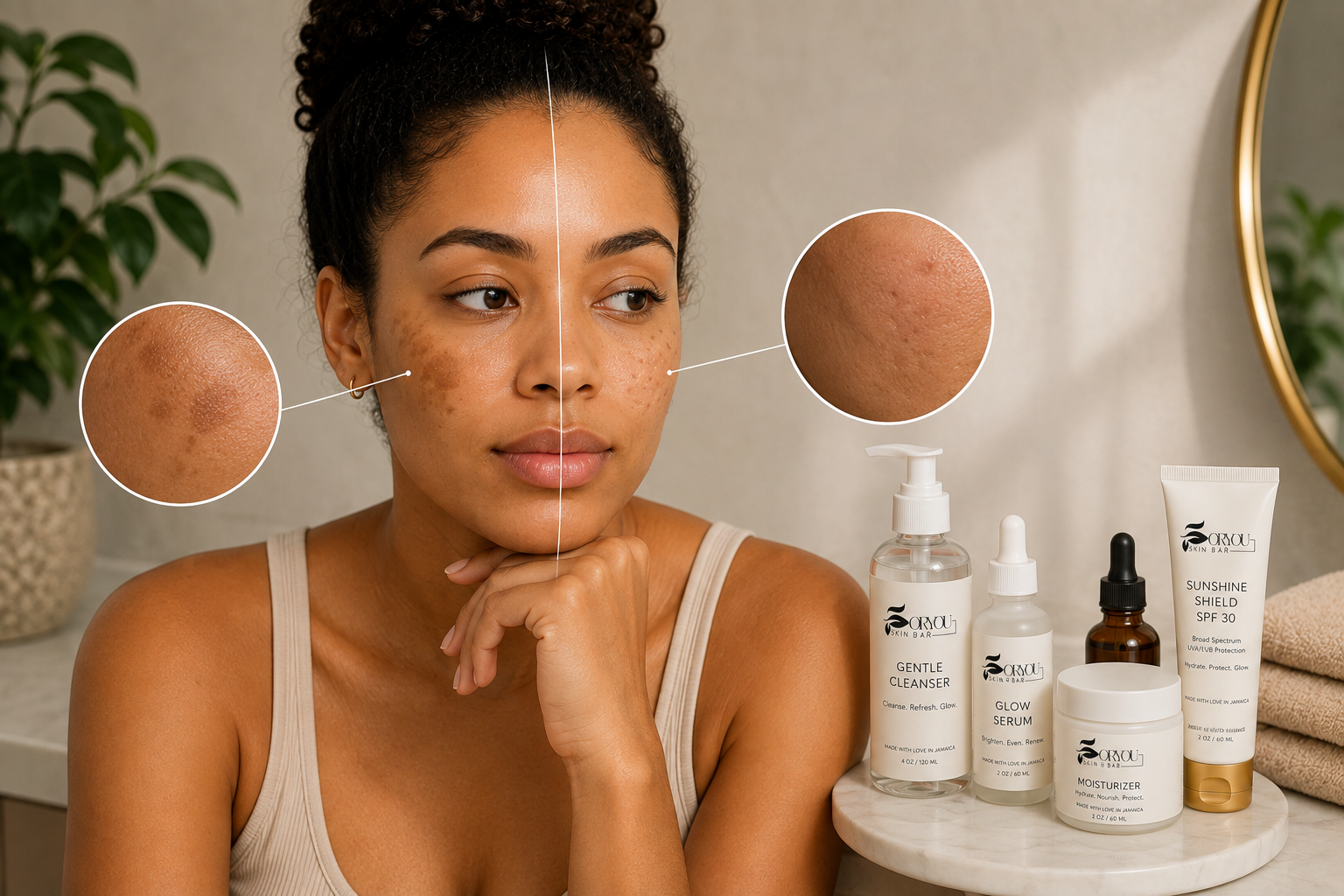
Your breakout has healed. But something is still there. Maybe it’s a dark mark that catches your eye every time you look in the mirror. Or perhaps you’ve noticed a small dent or raised area where the pimple used to be. Many people use the terms “acne scars” and “dark spots” interchangeably, but they’re not the same thing. Knowing the difference is important because each concern develops differently and may require a different approach. Let’s take a closer look.
Quick Facts
Topic
At a Glance
Acne scars Changes in the skin’s texture caused by damage to deeper layers of the skin.
Hyperpigmentation Flat areas of discoloration caused by excess melanin after inflammation.
Can they occur together? Yes. Some people experience both acne scars and post-inflammatory hyperpigmentation.
Most common after acne? Post-inflammatory hyperpigmentation, especially in melanin-rich skin.
The Biggest Difference
A simple way to remember it is this:
Hyperpigmentation changes colour. Acne scars change texture.
If you close your eyes and gently run your fingers over the area:
· If it feels smooth but looks darker, it’s more likely to be post-inflammatory hyperpigmentation (PIH).
· If it feels raised, indented, or uneven, it’s more likely to be an acne scar.
Sometimes both concerns can exist in the same area.
📖 Skin School
Post-Inflammatory Hyperpigmentation (PIH)
PIH is a flat area of discoloration left behind after inflammation. It commonly develops after acne, insect bites, cuts, burns, or other skin injuries. Unlike scars, PIH does not change the texture of the skin.
What Is Hyperpigmentation?
Hyperpigmentation develops when your skin produces extra melanin during the healing process. Once the acne has settled, the pigment remains behind. These marks may appear:
· Brown
· Dark brown
· Gray
· Purple-brown
The exact colour depends on your natural skin tone and the depth of the pigmentation. The encouraging news is that many cases of post-inflammatory hyperpigmentation gradually improve over time with consistent skincare and daily sun protection.
🌿 The Foryou Tip
If the mark feels smooth, be patient. Many dark spots gradually become less noticeable as your skin naturally renews itself. Consistency is one of the best things you can give your skin.
What Are Acne Scars?
Acne scars develop differently. Instead of affecting pigment, they affect the structure of your skin. When deeper inflammation damages collagen, the protein that helps give skin its strength and support, the skin may heal unevenly. This can result in visible changes to texture.
Common Types of Acne Scars
Ice Pick Scars
These are narrow, deep scars that extend into the skin. They often look like tiny punctures.
Boxcar Scars
Boxcar scars have wider, well-defined edges. They often appear as shallow or deep depressions.
Rolling Scars
Rolling scars create a wave-like or uneven appearance across the skin. They usually have softer edges than boxcar scars.
Raised Scars
Some people develop raised scars rather than depressed scars. These occur when the skin produces excess collagen during healing.
💡 Did You Know?
Picking or squeezing inflamed pimples can increase the risk of both hyperpigmentation and acne scars by increasing inflammation and delaying the skin’s natural healing process.
Side-by-Side Comparison
Hyperpigmentation - Acne Scars
Changes skin colour - Changes skin texture
Skin feels smooth - Skin may feel raised or indented
Often fades gradually - May persist without professional treatment
Caused by excess melanin - Caused by collagen changes after inflammation
Common in melanin-rich skin - Can affect any skin tone
Why Melanin-Rich Skin Is Different
People with deeper skin tones are more likely to experience post-inflammatory hyperpigmentation after acne. This doesn’t mean the skin is weaker. It’s simply a reflection of how melanocytes respond during healing. Because melanin-rich skin naturally produces more pigment, even a small breakout may leave behind a noticeable dark mark. Understanding this helps set realistic expectations. Your skin isn’t “healing badly.” It’s healing differently.
🌺 From Jamaica With Care
In Jamaica’s sunny climate, protecting healing skin from UV exposure is especially important. Even if you spend only short periods outdoors, sunlight can make post-inflammatory hyperpigmentation appear darker and last longer. A wide-brimmed hat, seeking shade when practical, and wearing broad-spectrum sunscreen daily are simple habits that help support a more even-looking complexion.
Can You Have Both?
Yes. Some people have both acne scars and hyperpigmentation in the same area. For example, a deep breakout may leave:
· A small indentation in the skin (an acne scar)
· A dark mark over that area (post-inflammatory hyperpigmentation)
Understanding the difference helps you set realistic expectations and choose skincare products or professional treatments that match your concerns.
Myth vs. Fact
Myth: Every dark mark after acne is a scar.
Fact: Most dark marks left after acne are post-inflammatory hyperpigmentation, not scars. They affect skin colour rather than texture and often improve gradually with time and consistent skincare.
💚 Healthy Skin Habit
Resist the urge to pick at healing blemishes. Reducing unnecessary inflammation gives your skin the best opportunity to heal with fewer marks.
Key Takeaways
· Hyperpigmentation changes skin colour; acne scars change skin texture.
· Post-inflammatory hyperpigmentation is especially common in melanin-rich skin.
· Daily sunscreen helps protect healing skin and supports a more even-looking complexion.
· Picking at acne increases the risk of both dark spots and scars.
· Understanding the difference helps you build a more effective skincare routine.
Before You Go…
Every mark tells a story, but it doesn’t tell your whole story. Whether you’re managing dark spots, acne scars, or both, remember that healthy-looking skin takes time, consistency, and patience. Be kind to your skin as it heals. At Foryou Skin Bar, we believe understanding your skin is the first step toward caring for it with confidence.
Continue Reading
· The Complete Guide to Hyperpigmentation
· How Long Does It Really Take to Fade Dark Spots?
· The Biggest Mistakes People Make When Treating Dark Spots
· The Complete Guide to Acne
Medical Disclaimer
The information provided in The Foryou Skin Journal is for educational purposes only and is not intended to diagnose, treat, cure, or prevent any medical condition. If you have severe acne scarring or persistent skin concerns, consult a qualified healthcare provider or dermatologist to discuss the most appropriate treatment options.
References
This article is informed by educational guidance from the American Academy of Dermatology, the National Institute of Arthritis and Musculoskeletal and Skin Diseases (NIAMS), and peer-reviewed dermatology literature on acne scarring and post-inflammatory hyperpigmentation.
Last Reviewed: August 2026
Reviewed by: The Foryou Skin Bar Editorial Team
© 2026 Foryou Skin Bar. All Rights Reserved.