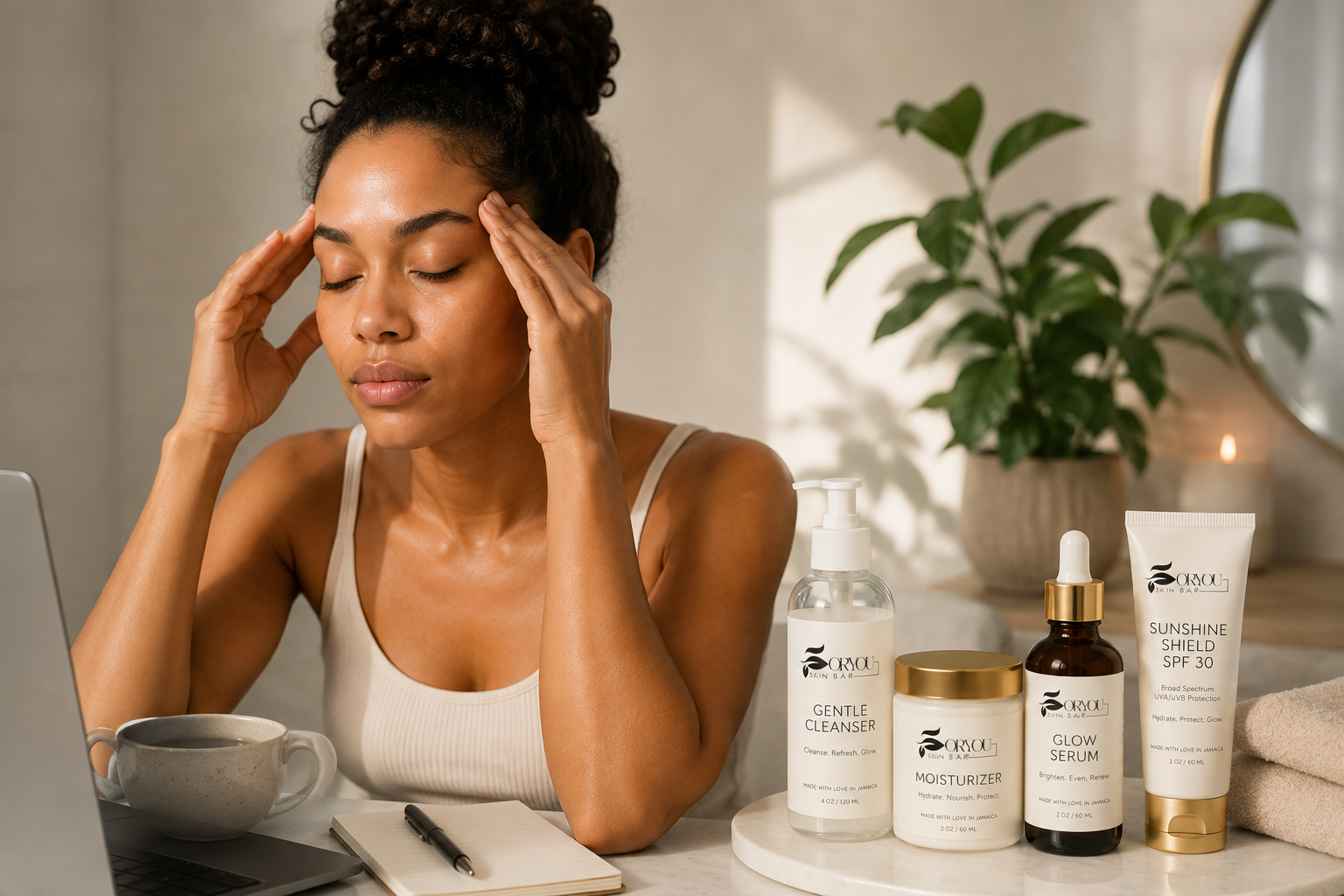
You’ve probably noticed it before.
A big exam is coming up. Work gets hectic. You’re not sleeping as well. Life simply feels like it’s moving faster than usual.
Then, somehow, a breakout appears.
It can leave you wondering:
“Is stress actually causing my acne?”
The answer is a little more complicated than a simple yes or no.
Research and dermatology guidance suggest that stress can worsen acne, particularly in people who are already prone to breakouts. But stress isn’t the only cause of acne. Hormones, genetics, oil production, clogged pores, inflammation, and other factors can all play a role.
So if you’ve ever blamed yourself for a breakout because you’ve been stressed, take a breath.
Your skin isn’t failing you.
Let’s look at what may actually be happening.
Quick Facts
Question
The Short Answer
Can stress cause acne?
Stress can worsen existing acne and may contribute to flare-ups.
Is stress the only cause?
No. Acne usually develops from multiple contributing factors.
Why might stress affect acne?
Stress-related hormonal changes can increase oil production and influence inflammation.
Can reducing stress cure acne?
No. Stress management can support overall well-being, but acne may still require skincare or professional treatment.
Should you change your entire routine during stressful periods?
Not necessarily. Keeping your routine simple and consistent can be more helpful than constantly changing products.
First, What Actually Causes Acne?
Before talking about stress, it’s important to understand that acne is a complex skin condition.
Breakouts can develop when several processes come together, including:
· Excess oil production
· Dead skin cell buildup
· Clogged pores
· Inflammation
· Changes involving hormones
· Genetic factors
That’s why there usually isn’t one single explanation for someone’s acne.
Two people can have similar lifestyles and completely different skin.
And one person can experience different triggers at different times in their life.
📖 Skin School
Stress Response
When you’re under stress, your body responds by releasing hormones and other chemical signals that help you deal with the situation.
This response is useful in the short term.
However, ongoing stress can affect several systems in the body—including the skin.
Researchers have found connections between psychological stress and worsening acne, although the relationship is complex.
So, How Does Stress Affect Acne?
One possible connection involves your body’s hormonal response to stress.
The American Academy of Dermatology notes that stress can worsen acne because stress-related hormonal changes may increase oil production. Extra oil can contribute to clogged pores and acne flare-ups.
But that’s not necessarily the whole story.
Stress can also influence inflammation and everyday behaviors that affect your skincare routine.
For example, when you’re overwhelmed, you might:
· Sleep less
· Touch your face more
· Pick at blemishes
· Skip parts of your routine
· Change products impulsively
· Sweat more during periods of increased activity or tension
None of these factors means that stress is the cause of your acne.
They simply illustrate how stress and skin health can become connected.
🌿 The Foryou Tip
If you notice more breakouts during stressful periods, don’t respond by attacking your skin with more products.
Instead, return to the basics:
Cleanse gently.
Moisturize.
Protect your skin during the day.
Use your targeted treatment consistently.
Give your skin time.
Your skin doesn’t need punishment because you’re having a stressful week.
Can Stress Make Hormonal Acne Worse?
It can.
Hormonal changes are already an important contributor to acne for many people. Stress may add another layer to the situation.
This can be especially frustrating if your breakouts tend to follow a predictable pattern.
If you’re experiencing recurring acne around the chin or jawline, or breakouts that seem connected to hormonal changes, it may be worth discussing the pattern with a healthcare professional.
You don’t need to figure out the cause by yourself.
💡 Did You Know?
The relationship between stress and acne may work in both directions.
Stress can make acne more difficult to manage, while dealing with persistent acne can itself become stressful.
Researchers have described this as a potentially bidirectional relationship between psychological stress and acne.
That means caring for acne isn’t only about what you put on your skin.
Your overall well-being matters too.
What Can You Do During a Stressful Period?
You don’t need to eliminate every source of stress from your life.
That’s unrealistic.
Instead, focus on small habits that help you take care of yourself.
Keep Your Routine Simple
Stress isn’t the best time to experiment with five new skincare products.
Stick with products your skin already tolerates well whenever possible.
The American Academy of Dermatology recommends avoiding frequent changes to acne treatments because repeatedly switching products can irritate the skin.
Get Enough Rest
Sleep is an important part of overall health.
When life becomes busy, sleep is often one of the first things to suffer.
Whenever possible, protect your regular sleep schedule.
Move Your Body
Walking, stretching, dancing, sports, or another form of movement you enjoy can be a useful way to manage everyday stress.
The goal isn’t to exercise because you need to “fix” your skin.
It’s simply another way to care for your overall well-being.
Take a Break
Sometimes the simplest thing is stepping away for a few minutes.
Try:
· Deep breathing
· Journaling
· Listening to music
· Spending time outside
· Talking with someone you trust
· Quiet reflection or prayer
Stress-management practices can support overall well-being and may complement professional care for stress-related skin concerns.
💚 Healthy Skin Habit
Create a “minimum routine” for busy days.
If you don’t have the energy for your full routine, focus on the essentials:
Cleanse → Moisturize → Protect during the day.
Keeping a simple baseline makes it easier to stay consistent when life gets hectic.
Myth vs. Fact
Myth
“If I’m stressed, my acne is my fault.”
Fact
Absolutely not.
Stress is only one possible factor in acne, and acne itself can have many contributing causes.
Having a breakout doesn’t mean you’ve done something wrong.
Myth vs. Fact
Myth
“If I can eliminate stress completely, my acne will disappear.”
Fact
Stress management may help reduce one factor that can worsen acne, but it isn’t a guaranteed acne cure.
Acne may still require a consistent skincare routine or professional treatment.
What About Stress-Related Picking?
When you’re anxious, bored, or concentrating, you may find yourself touching your face without realizing it.
If you notice yourself picking at blemishes, try keeping your hands occupied with another activity.
The reason matters because picking can increase inflammation and raise the risk of dark spots and scarring. Dermatologists recommend resisting the urge to squeeze or pick acne.
For melanin-rich skin in particular, reducing unnecessary inflammation can be especially important because post-inflammatory hyperpigmentation can remain after a breakout has healed.
🌺 From Jamaica With Care
Stress doesn’t care what climate you live in, but your environment can influence how your skin feels.
Jamaica’s warm climate can mean more sweating and humidity, particularly when you’re already feeling physically or emotionally overwhelmed.
If you’ve had a stressful day outdoors, resist the temptation to repeatedly scrub or wash your face.
Instead, gently cleanse after significant sweating and return to your normal routine.
Your goal is balance, not stripping your skin.
⏳ What to Expect
If stress is contributing to your breakouts, you may notice that your skin improves as stressful periods settle, but don’t expect an immediate change.
Acne treatments themselves generally require several weeks to show improvement. The AAD notes that people may need to use an acne treatment consistently for 6–8 weeks before seeing improvement, with more complete clearing often taking longer.
During a stressful period
Focus on consistency and gentle care.
After the stressful period
Continue your routine rather than immediately replacing everything.
Over the following weeks
Watch for gradual changes in the frequency and severity of breakouts.
When Should You Get Professional Help?
Consider speaking with a dermatologist or healthcare provider if your acne:
· Is deep or painful
· Keeps returning despite consistent care
· Is leaving scars
· Is becoming more severe
· Is affecting your quality of life
A dermatologist can help determine what’s contributing to your acne and recommend appropriate treatment.
And remember seeking professional help doesn’t mean your skincare routine has failed. Sometimes your skin simply needs a different level of support.
Key Takeaways
· Stress can worsen acne, particularly if you’re already prone to breakouts.
· Stress isn’t the only cause of acne.
· Hormonal changes, genetics, oil production, clogged pores, and inflammation can all contribute.
· Stress may also affect behaviors such as sleep, skincare consistency, and picking.
· Keeping your routine simple during stressful periods can help prevent additional irritation.
· Managing stress supports your overall well-being, but it isn’t a replacement for acne treatment.
· Persistent or painful acne may require professional care.
Frequently Asked Questions
Can one stressful day cause acne?
Not necessarily.
Acne develops through several processes, and a single stressful day doesn’t automatically create a breakout. However, periods of stress may contribute to flare-ups in people who are already acne-prone.
Does stress cause oily skin?
Stress can influence hormones that increase oil production, which may contribute to acne in some people.
Can relaxing get rid of acne?
Relaxation and stress management can support overall health and may help reduce one factor that worsens acne. But acne has multiple possible causes, so stress management alone isn’t a guaranteed treatment.
Should I change my skincare routine when I’m stressed?
Usually, there’s no need to completely change your routine. Keeping things simple and consistent may be more helpful than introducing several new products at once.
Can stress make dark spots worse?
Stress itself isn’t the direct cause of post-inflammatory hyperpigmentation, but stress-related breakouts, picking, and increased inflammation can contribute to the skin events that leave dark marks behind.
Before You Go…
Stress is part of life.
You can’t always control the deadlines, responsibilities, changes, or unexpected moments that come your way.
But you can choose how you care for yourself while moving through them.
Give your skin consistency.
Give yourself patience.
And remember that a breakout during a difficult period doesn’t mean you’ve lost all your progress.
Healthy-looking skin isn’t about having a perfectly calm life.
It’s about learning how to care for your skin through all the different seasons of life.
At Foryou Skin Bar, we believe skincare should support your confidence—not become another source of stress.
Take a breath.
Keep it simple.
Keep going.
Continue Your Journey
· The Complete Guide to Acne
· Why Your Acne Keeps Coming Back (And How to Stop the Cycle)
· The Best Skincare Routine for Hormonal Acne
· The Difference Between Acne Scars and Hyperpigmentation
· The Complete Guide to Building a Skincare Routine
Medical Disclaimer
The information provided in The Foryou Skin Journal is for educational and informational purposes only. It is not intended to diagnose, treat, cure, or prevent any disease or medical condition, nor should it replace professional medical advice, diagnosis, or treatment.
If you have persistent, painful, severe, or scarring acne, consult a qualified healthcare provider or dermatologist for individualized advice.
Products from Foryou Skin Bar are designed to support healthy-looking skin and should be used as directed.
References
This article is informed by current dermatology guidance and scientific literature, including resources from the American Academy of Dermatology and peer-reviewed research examining the relationship between psychological stress and acne.
Last Reviewed: August 2026
Reviewed by: The Foryou Skin Bar Editorial Team
© 2026 Foryou Skin Bar. All Rights Reserved.